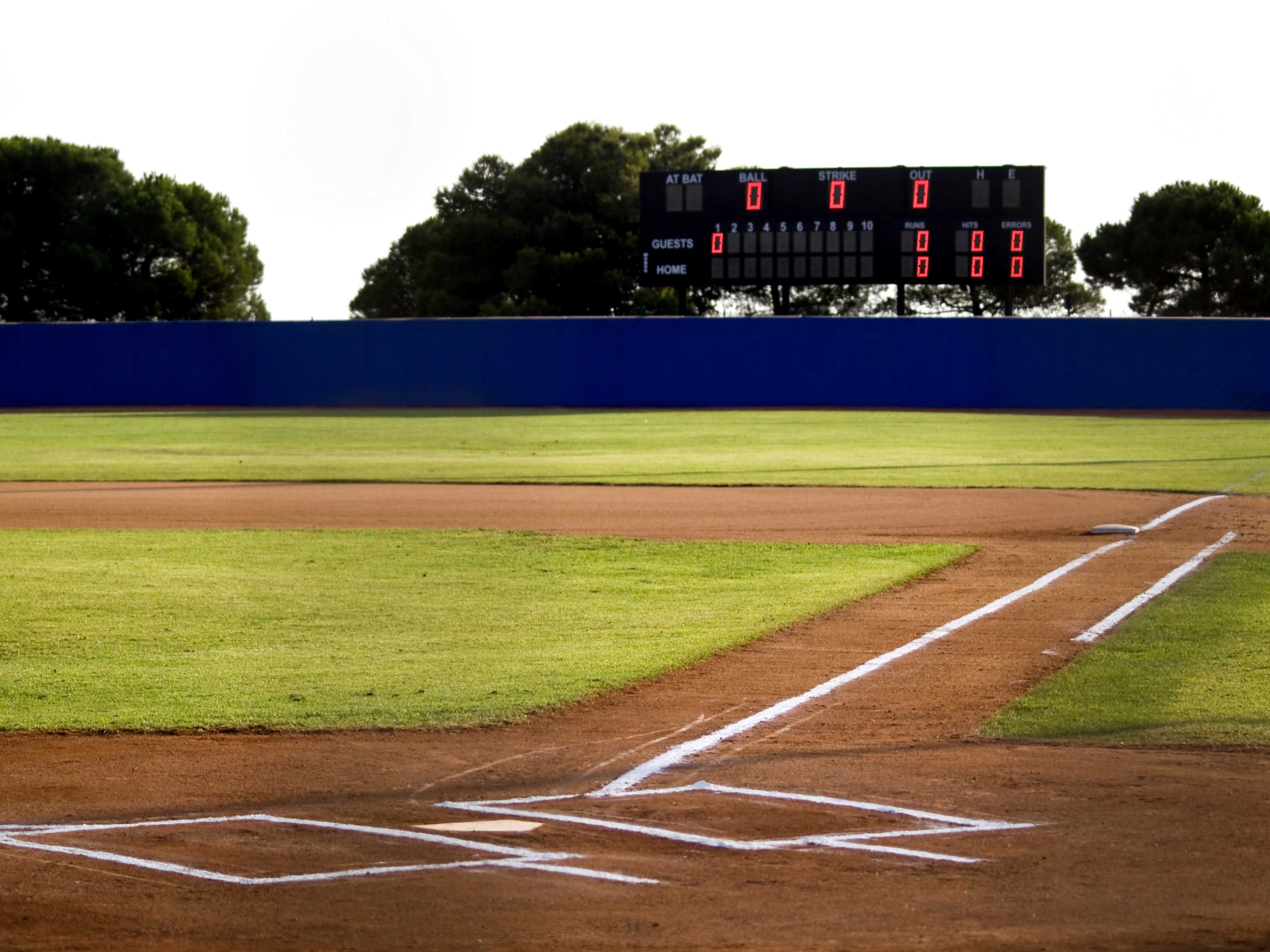
Ever wonder why baseball and softball fields seem to change shape and size as players grow up? It’s not just your imagination—the fields actually evolve as players move from tee-ball to the big leagues! Whether you’re a parent, coach, or just a fan, understanding softball field size and differences in baseball field dimensions by age group can help you appreciate the game even more. So, let’s step up to the plate and dive into the world of baseball and softball field sizes, where every inch matters!

Softball Field Dimensions
Softball shares many similarities to baseball, but the softball field measurements tell a different story. Designed for a faster-paced game, softball field sizes are more compact, which means more action in less space.
The Softball Diamond:
In softball, the bases are 60 feet apart, making every play a close call. The distance from home plate to the centerfield fence ranges from 200-300 feet depending on softball league requirements. The distance from home to the middle of second base if 84 feet 10 1/4 inches.
The Pitching Circle:
The distance from home plate to the front of the pitching circle is approximately 42 feet when the pitching circle has a regulation 16-foot diameter. The pitching rubber sits at approximately 50 feet from home plate. This is a shorter distance from home plate than what baseball pitchers see on a standard diamond.
Softball Field Measurements Depending on the League
Below is a breakdown of all the common softball field size differences between the foul line running past the corner of third base to the foul line on the first base side of the field.
Outfield Fence Distance from Home Plate:
- Fast pitch: 185′-235′
- Women’s slow pitch: 250′-275′
- Men’s slow pitch: 275′-300′
Infield distances
- Bases are typically 60 feet apart regardless of league.
- Pitching circle is 16 feet in diameter
- 25 feet is the standard distance from home plate to the backstop
- Each batter’s box is 7 feet long and 3 feet wide
From Tiny Tots to Major Leaguers: A Baseball Field for Every Age
The beauty of baseball and softball is that they’re sports for everyone, from your littlest sluggers just learning to swing to seasoned pros who make hitting home runs look easy. However, what works for a 5-year-old isn’t going to cut it for a teenager with a killer fastball. That’s why field dimensions vary depending on the age and skill level of the players. Baseball fields tend to vary more depending on age than softball field size.
Tee-Ball Field Size (Ages 4-7)
Remember those tiny kids swinging with all their might? They play on a field where the bases are just 50 feet apart, and the outfield fence is around 125 feet away. It’s the perfect setup for beginners learning the basics and dreaming of hitting their first home run!
Minor League Field Size (Ages 5-12)
As players age and strengthen, the diamond expands to 60 feet between bases, with a pitching distance of 46 feet. The outfield stretches beyond 200 feet, setting the stage for those first exciting hits that really fly.
Major League Field Size (Ages 9-12)
Here, the diamond still measures 60 feet, but the field feels a bit more grown-up. Pitchers stand 46 feet from the plate, and the outfield’s minimum size remains 200 feet. It’s the first taste of a real ballpark experience.
Intermediate 50/70 League Field Size (Ages 11-13)
This is where things start to feel serious! The bases stretch out to 70 feet, and the pitching rubber moves back to 50 feet. The outfield dimensions are still 200 feet or more, making it the perfect step up before moving to a full-sized field.
Junior and Senior Leagues Field Size (Ages 12-16)
Welcome to the big leagues—or at least something close! With 90 feet between the bases and a pitching distance of 60 feet 6 inches, these fields mimic the pros, complete with an outfield that’s 300 feet or more. It’s game on for the teens!
A Field for Every Stage
From the tiniest tee-ball fields to the sprawling diamonds of high school and beyond, each baseball and softball field is sized perfectly for the skill level of players who step onto it. Understanding these field dimensions not only helps you appreciate the game but also gives you an edge when it comes to coaching or even spectating.
Keep Learning with Us!
Do you have a burning question about baseball or softball? Want to stay updated on the latest tips and tricks for your game? Subscribe below for more insights and updates! Whether you’re a coach, player, or super fan, there’s always something new to discover.